

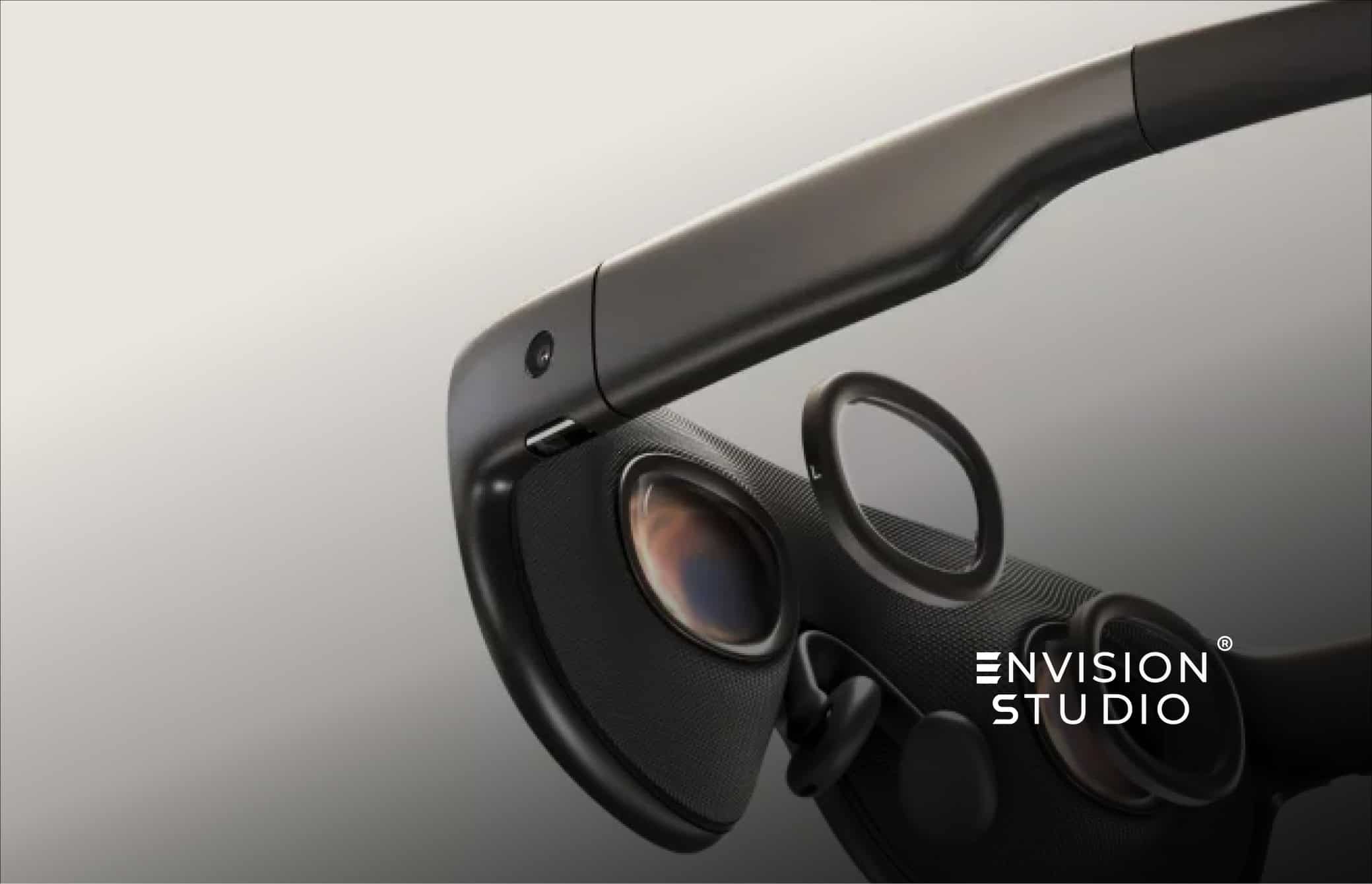
The Meta Project Phoenix leak just surfaced hours ago — not from a rumour or a source, but from assets buried inside a Quest firmware update. What it shows is a genuine shift in direction for Meta’s hardware, and it’s worth paying attention to if you’re planning any XR investment over the next 18 months.
What the Meta Project Phoenix Leak Actually Shows
Discovered inside a recent Quest firmware update, the leaked assets reveal a headset that looks almost nothing like the Quest 3 or 3S. Project Phoenix has a genuinely glasses-like form factor — nose pads, sensors along the outside of the temples, a design closer to Xreal or Google’s Aura XR glasses than a traditional VR headset.
The most striking detail: at just 110 grams, Project Phoenix would be dramatically lighter than any Meta headset released so far. That weight reduction comes from a deliberate trade-off — the compute and battery are offloaded to a separate, cable-tethered unit, keeping the actual glasses light enough to wear comfortably for extended periods.
No Controllers, No Name, No Price Yet
Based on the leaked firmware assets, Project Phoenix is expected to support pass-through cameras, pancake lenses, and depth sensing, with interaction handled entirely through eye and hand tracking — no physical controllers at all. Meta has not officially confirmed a name, price, or release date, and industry reporting currently points to a 2026 or 2027 launch window.
Why the Timing Matters
This leak lands less than two weeks before Meta Connect 2026, scheduled for 23-24 September — Meta’s primary venue for major hardware announcements since the Oculus days. If the leak’s timing is any indication, we may get official confirmation, or at least an early tease, within days rather than months.
What This Means If You’re Planning Enterprise XR
If Project Phoenix represents Meta’s next major hardware direction, businesses currently evaluating headsets for training, visualisation or field use should watch this closely before committing to large-scale Quest 3 deployments. A controller-free, glasses-style form factor changes the interaction model significantly — which matters for anything built around hand controllers today.
This doesn’t mean pause every project. It means build with the interaction model in mind, so future-proofing isn’t an afterthought.
Considering an XR project and not sure how new hardware might affect it? Book a free 30-minute XR consultation — we track hardware shifts like this specifically so your project doesn’t get caught off guard by them.
Frequently Asked Questions
What is Meta Project Phoenix?
Project Phoenix is the codename for Meta’s leaked next-generation mixed reality headset, revealed through assets found in a Quest firmware update, featuring a glasses-like design and controller-free operation.
How much does Project Phoenix weigh?
Leaked details suggest Project Phoenix weighs just 110 grams, achieved by moving compute and battery hardware to a separate tethered unit.
When will Meta officially announce Project Phoenix?
No official announcement date has been confirmed, but the leak emerged shortly before Meta Connect 2026 on 23-24 September, historically Meta’s main hardware announcement event.
Does Project Phoenix use controllers?
Based on leaked firmware assets, Project Phoenix appears to rely entirely on eye and hand tracking for interaction, with no physical controllers.
Sourced from Road to VR and Gizmodo reporting, September 2026 — roadtovr.com