

 stargaze_admin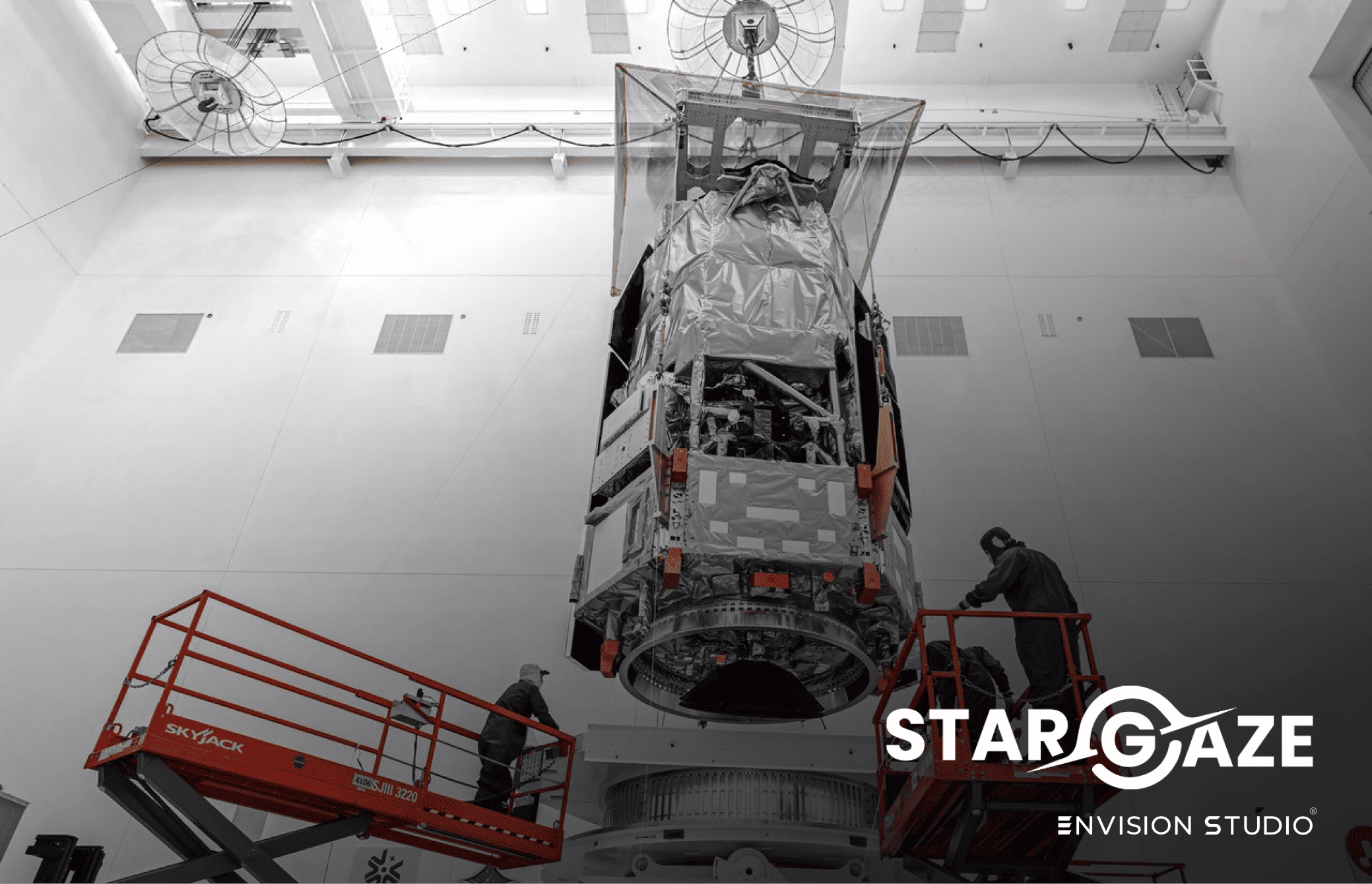
The Nancy Grace Roman Space Telescope is NASA’s next great space observatory — launching on 30 August 2026 at 7:26 AM EDT from Launch Complex 39A at Kennedy Space Center, Florida, aboard a SpaceX Falcon Heavy rocket. Named after NASA’s first Chief of Astronomy and the “mother of the Hubble Space Telescope,” the Roman Space Telescope will have a field of view at least 100 times larger than Hubble’s — potentially measuring light from a billion galaxies in its lifetime.
This is the most comprehensive guide to the Nancy Grace Roman Space Telescope — covering the telescope’s construction, instruments, science goals, technology, orbit and what it means for the future of space exploration.
Nancy Grace Roman Space Telescope — Mission Overview
The Nancy Grace Roman Space Telescope will settle essential questions in the areas of dark energy, exoplanets and infrared astrophysics. This observatory will also be able to block starlight to directly see exoplanets and planet-forming disks, complete a statistical census of planetary systems in our galaxy, and produce sweeping, deep, crisp views of space never possible before.
More than a thousand technicians and engineers assembled Roman from millions of individual components. On 25 November 2025 the two major segments of the observatory were joined together — completing construction. The observatory then underwent final testing before shipping to Kennedy Space Center in June 2026.
Who Was Nancy Grace Roman?
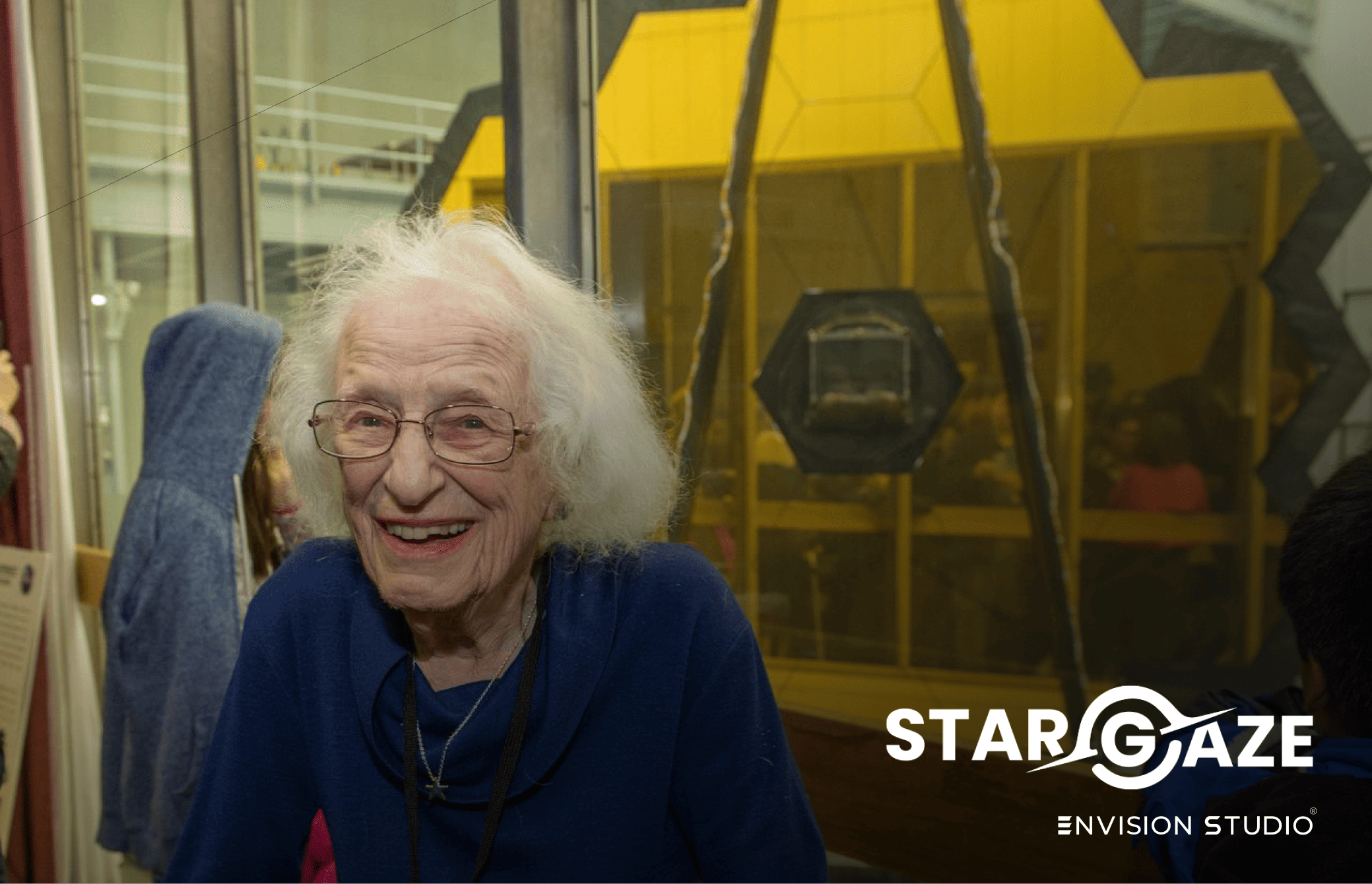
The Nancy Grace Roman Space Telescope is named after Dr. Nancy Grace Roman (1925–2018) — NASA’s first chief of astronomy and the “mother of the Hubble Space Telescope.” She championed space-based observatories that could study the universe above Earth’s hazy atmosphere while making their data broadly available to the scientific community.
Roman joined NASA in 1959 and became the first woman to hold an executive position at the agency. She spent her career fighting for the Hubble Space Telescope decades before its 1990 launch — and without her vision and advocacy, modern space astronomy would look entirely different. The telescope bearing her name is a fitting tribute to one of the most important figures in the history of space science.
Nancy Grace Roman Space Telescope Launch Details
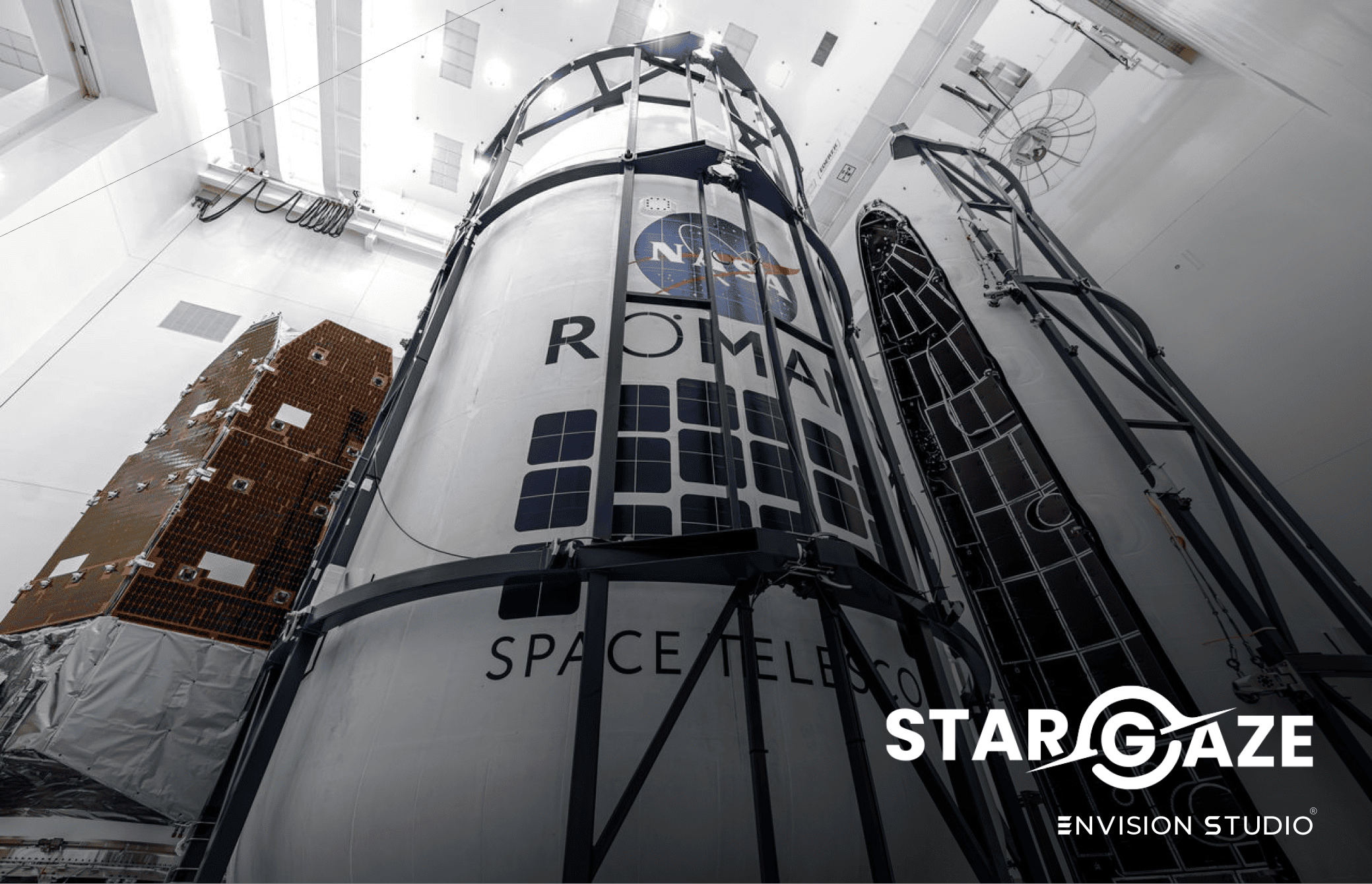
The Nancy Grace Roman Space Telescope launched on 30 August 2026 at 07:26 AM EDT on a SpaceX Falcon Heavy rocket from Launch Complex 39A at NASA’s Kennedy Space Center in Florida. After launch, Roman will travel approximately 1.5 million kilometres from Earth to the Sun-Earth L2 Lagrange point — the same gravitationally stable orbit used by the James Webb Space Telescope.
Following arrival the telescope will undergo a carefully orchestrated series of deployments, calibrations and tests over approximately three months before science operations begin.
Nancy Grace Roman Space Telescope — Full Specifications
| Specification | Detail |
|---|---|
| Launch Date | 30 August 2026, 07:26 AM EDT |
| Launch Vehicle | SpaceX Falcon Heavy |
| Launch Site | Launch Complex 39A, Kennedy Space Center, Florida |
| Orbit | Sun-Earth L2 Lagrange point — 1.5 million km from Earth |
| Primary Mirror Diameter | 7.9 feet (2.4 metres) — same as Hubble |
| Primary Mirror Weight | 410 pounds (186 kg) — less than one-fourth the weight of Hubble’s mirror |
| Primary Mirror Manufacturer | L3Harris Technologies, Rochester, New York |
| Field of View | At least 100 times larger than Hubble |
| Camera Resolution | 300 megapixels |
| Detector Count | 18 detectors in focal plane array — 6 flight spares |
| Each Detector Size | Size of a saltine cracker — 16.8 million pixels each |
| Wavelength Range | 0.5 to 2.3 micrometres — near-infrared |
| Primary Instrument | Wide Field Instrument (WFI) — built at Goddard and BAE Systems |
| Secondary Instrument | Coronagraph Instrument — built at NASA Jet Propulsion Laboratory |
| Solar Panels | 6 panels — 2 fixed, 4 deployable — face Sun throughout mission |
| Data Volume | 20,000 terabytes (20 petabytes) over 5-year primary mission |
| Mission Duration | Minimum 5 years — goal 10 years |
| Expected Exoplanets | 100,000+ distant worlds in first five years |
| Galaxies to Survey | Hundreds of millions — up to 1 billion in lifetime |
| Mission Cost | USD 4.3 billion |
| Managed By | NASA Goddard Space Flight Center, Greenbelt, Maryland |
| Construction Completed | 25 November 2025 |
How the Nancy Grace Roman Space Telescope Was Built
The Optical Telescope Assembly
The Optical Telescope Assembly is the heart of the Roman observatory. It consists of a primary mirror designed and built at L3Harris Technologies in Rochester, New York, plus nine additional mirrors and supporting structures and electronics.
Roman’s primary mirror is 7.9 feet (2.4 metres) across — the same size as the Hubble Space Telescope’s main mirror — but less than one-fourth the weight at just 410 pounds (186 kilograms) thanks to major improvements in technology. The telescope was delivered on 7 November 2024 to the largest clean room at NASA’s Goddard Space Flight Center in Greenbelt, Maryland.
As Josh Abel, lead Optical Telescope Assembly systems engineer at NASA Goddard, explained: “The telescope will be the foundation of all of the science Roman will do, so its design and performance are among the largest factors in the mission’s survey capability.”
When light enters Roman’s 7.9-foot aperture it is reflected and focused by the curved primary mirror and then reflected and focused once more by the secondary mirror. Light from different parts of the sky then splits off toward each of Roman’s two science instruments simultaneously.
The Detector Array — 300 Megapixels of Infrared Vision
Roman’s detector array converts starlight into electrical signals which are decoded into 300-megapixel images of large patches of the sky. The detectors — each the size of a saltine cracker — contain approximately 16.8 million tiny pixels each. Eighteen detectors were incorporated into the focal plane array with another six reserved as flight-qualified spares.
Roman’s detectors build on the legacy of the infrared detectors in NASA’s Hubble and Webb instruments but are much larger to capture a far greater field of view. The combination of Roman’s fine resolution and enormous images has never been possible on a space-based telescope before.
Nancy Grace Roman Space Telescope Instruments
Wide Field Instrument — Roman’s Primary Camera
The Wide Field Instrument is an infrared camera that gives Roman the same angular resolution as Hubble but with a field of view at least 100 times larger. Each Roman image will capture a patch of sky bigger than the apparent size of a full moon. The mission will gather data hundreds of times faster than Hubble — adding up to 20,000 terabytes over its five-year primary mission.
The Wide Field Instrument was assembled and tested at Goddard and BAE Systems in Boulder, Colorado. It was delivered to Goddard in summer 2024 and joined to other observatory systems the following winter.
The WFI’s sweeping cosmic surveys will help scientists:
- Discover new information about planets beyond our solar system
- Untangle mysteries like dark energy
- Map how matter is structured and distributed throughout the cosmos
- Produce an extraordinary resource for a wide range of additional investigations
Coronagraph Instrument — Photographing Other Worlds
The Coronagraph Instrument was built at NASA’s Jet Propulsion Laboratory. It will demonstrate new technologies for directly imaging planets around other stars by blocking the glare from distant stars — making it easier for scientists to see the faint light from planets in orbit around them.
The Coronagraph aims to photograph worlds and dusty disks around nearby stars in visible light — revealing giant worlds that are older, colder and in closer orbits than the hot young planets direct imaging has mainly revealed so far. The coronagraph team will conduct pre-planned observations for three months spread across the mission’s first year-and-a-half of operations.
The Coronagraph was delivered to Goddard in May 2024, integrated onto Roman’s Instrument Carrier in October 2024 and joined to the spacecraft in December 2024.
Solar Panels — Powering Roman Through Space
Roman’s Solar Array Sun Shield consists of six panels — each covered in solar cells. Two central panels remain fixed to the Outer Barrel Assembly while the other four deploy once Roman is in space. The panels face the Sun throughout the entire mission providing a steady supply of power and shading the observatory’s instruments — which is critical because infrared light is detectable as heat, and excess warmth from the spacecraft’s own components would saturate the detectors and effectively blind the telescope.
What Will the Nancy Grace Roman Space Telescope Study?
Dark Energy — Understanding the Accelerating Universe
Dark energy is the mysterious force driving the accelerating expansion of the universe — accounting for approximately 68% of the total energy content of the cosmos. Scientists do not yet know what it is. The Nancy Grace Roman Space Telescope will survey hundreds of millions of galaxies across vast cosmic distances, measuring how the large-scale structure of the universe has evolved over billions of years.
Roman will conduct three primary surveys:
- High Latitude Wide Area Survey — mapping the shapes and positions of hundreds of millions of galaxies to measure gravitational lensing by dark matter
- High Latitude Time Domain Survey — monitoring thousands of Type Ia supernovae to measure cosmic expansion rates across billions of years
- Galactic Bulge Time Domain Survey — monitoring hundreds of millions of stars in the Milky Way centre to detect exoplanets through gravitational microlensing
Exoplanets — The Statistical Census of Worlds
Roman will complete a statistical census of planetary systems in our galaxy — discovering worlds that current methods simply cannot detect. By showcasing technology to directly photograph Jupiter-like exoplanets, Roman will also provide a crucial stepping stone for NASA’s Habitable Worlds Observatory — a future flagship space telescope designed to photograph Earth-like planets in other solar systems for the first time.
Exoplanet types Roman is expected to discover:
- 🌍 Earth-mass planets in wide orbits
- 🪐 Free-floating planets ejected from their solar systems
- 🌑 Ice giant planets like Uranus and Neptune
- ⭐ Multi-planet systems across the galaxy
Infrared Astrophysics — Revealing the Hidden Universe
Roman will peer through dust and across vast stretches of space and time using infrared light — revealing star-forming regions, galaxy formation and structures completely invisible to optical telescopes. Scientists expect Roman to uncover hundreds of millions of galaxies and possibly entirely new cosmic phenomena. As Roman senior project scientist Julie McEnery at NASA Goddard stated: “With Roman’s construction complete, we are poised at the brink of unfathomable scientific discovery. In the mission’s first five years, it’s expected to unveil more than 100,000 distant worlds, hundreds of millions of stars, and billions of galaxies.”
Nancy Grace Roman Space Telescope vs Hubble
| Feature | Hubble Space Telescope | Nancy Grace Roman Space Telescope |
|---|---|---|
| Mirror Diameter | 2.4 metres | 2.4 metres |
| Mirror Weight | ~800 kg | 186 kg — less than one-quarter of Hubble’s |
| Field of View | Narrow patches of sky | 100 times larger than Hubble |
| Camera Resolution | 16 megapixels | 300 megapixels |
| Data Speed | Standard rate | Hundreds of times faster than Hubble |
| Milky Way Survey | ~100 years | ~1 month |
| Wavelength | UV, visible, near-infrared | Near-infrared focused |
| Orbit | 550 km above Earth | L2 — 1.5 million km from Earth |
| Launch Year | 1990 | 2026 |
Nancy Grace Roman Space Telescope vs James Webb
The Nancy Grace Roman Space Telescope and the James Webb Space Telescope are complementary rather than competing observatories. Webb is optimised for extremely deep observations of individual targets. Roman is optimised for wide-field surveys — mapping vast regions of the sky simultaneously. Roman will identify targets that Webb can then study in greater depth — creating the most powerful astronomical partnership ever assembled. Roman will provide a panoramic field of view that is 200 times greater than Hubble’s infrared view, leading to the first wide-field maps of the universe at space-based resolution.
Where Will Roman Orbit — The L2 Lagrange Point
The Nancy Grace Roman Space Telescope will orbit approximately 930,000 miles (1.5 million kilometers) from Earth at the Sun-Earth L2 Lagrange point — the same gravitationally stable position as the James Webb Space Telescope. At L2 Roman always faces away from the Sun, Earth and Moon — keeping its infrared detectors cold and shielded. Unlike Hubble which orbits at 550 kilometres and can be serviced by astronauts, Roman at L2 must operate reliably for its entire mission lifetime without in-person maintenance.
What Will Roman Discover
- 🔭 The nature of dark energy — measured more precisely than ever before
- 🌍 100,000+ distant worlds in its first five years
- 🌌 Hundreds of millions of stars and billions of galaxies
- 💥 Nearly 100,000 supernovae — rewriting our understanding of cosmic expansion
- ⭐ Star-forming regions hidden behind dust clouds
- 🕳️ Dark matter distribution mapped through gravitational lensing
- 🌠 Possibly entirely new cosmic phenomena never previously observed
EXTERNAL LINKS TO ADD:
- Link to NASA’s official Roman page:
https://science.nasa.gov/mission/roman-space-telescope/ - Link to NASA’s 9 Things to Know article:
https://science.nasa.gov/missions/roman-space-telescope/9-things-to-know-about-nasas-nancy-grace-roman-space-telescope/
Explore the Nancy Grace Roman Space Telescope in Augmented Reality
At Stargaze XR we bring the most significant space missions to augmented reality — so anyone can explore the universe from their own living room.
We are excited to announce that the Nancy Grace Roman Space Telescope is coming to Stargaze XR as part of our upcoming Missions section. Place the full Roman observatory at life-size scale in mixed reality, explore its instruments up close and understand the science it is designed to unlock.
The Missions section launches soon — starting with Artemis 2 and expanding to cover the most iconic missions in space history. Roman will be among them.
Download Stargaze XR now:
Frequently Asked Questions — Nancy Grace Roman Space Telescope
When did the Nancy Grace Roman Space Telescope launch?
The Nancy Grace Roman Space Telescope launched on 30 August 2026 at 07:26 AM EDT from Launch Complex 39A at Kennedy Space Center, Florida aboard a SpaceX Falcon Heavy rocket.
What will the Nancy Grace Roman Space Telescope study?
The Nancy Grace Roman Space Telescope will study dark energy, dark matter and exoplanets — conducting wide-field infrared surveys to map galaxy formation, measure cosmic expansion and discover thousands of new worlds through gravitational microlensing.
How is the Roman Space Telescope different from James Webb?
James Webb makes extremely deep observations of individual targets. Roman surveys enormous areas of sky simultaneously — its field of view is 100 to 200 times wider than Hubble’s. They are complementary observatories designed to work together.
Who was Nancy Grace Roman?
Nancy Grace Roman (1925–2018) was NASA’s first Chief of Astronomy and a pioneering astrophysicist widely regarded as the “Mother of Hubble” for her central role in developing the Hubble Space Telescope.
How many worlds will the Roman Space Telescope discover?
The Nancy Grace Roman Space Telescope is expected to unveil more than 100,000 distant worlds, hundreds of millions of stars and billions of galaxies in its first five years of science operations.
Where does the Roman Space Telescope orbit?
The Roman Space Telescope orbits the Sun-Earth L2 Lagrange point — approximately 1.5 million kilometres from Earth — the same orbital position as the James Webb Space Telescope.
How does the Roman Space Telescope compare to Hubble?
Roman has the same size mirror as Hubble — 2.4 metres — but weighs less than one-quarter as much and has a field of view 100 times larger. A survey of the entire Milky Way that would take Hubble 100 years takes Roman approximately one month.
What is the Wide Field Instrument on Roman?
The Wide Field Instrument is Roman’s primary 300-megapixel infrared camera — consisting of 18 detectors each the size of a saltine cracker. It captures a patch of sky larger than the full moon in a single exposure and will gather 20,000 terabytes of data over the five-year primary mission.
What is the Roman Space Telescope Coronagraph?
The Coronagraph Instrument built at NASA’s Jet Propulsion Laboratory directly images exoplanets and dusty disks around nearby stars by blocking starlight — revealing giant worlds in closer, colder orbits than previous direct imaging has detected.
Can I explore the Roman Space Telescope in augmented reality?
Yes — the Nancy Grace Roman Space Telescope is coming to Stargaze XR. You will be able to place the full observatory at life-size scale in mixed reality on Meta Quest, iOS and Android.