

 stargaze_admin
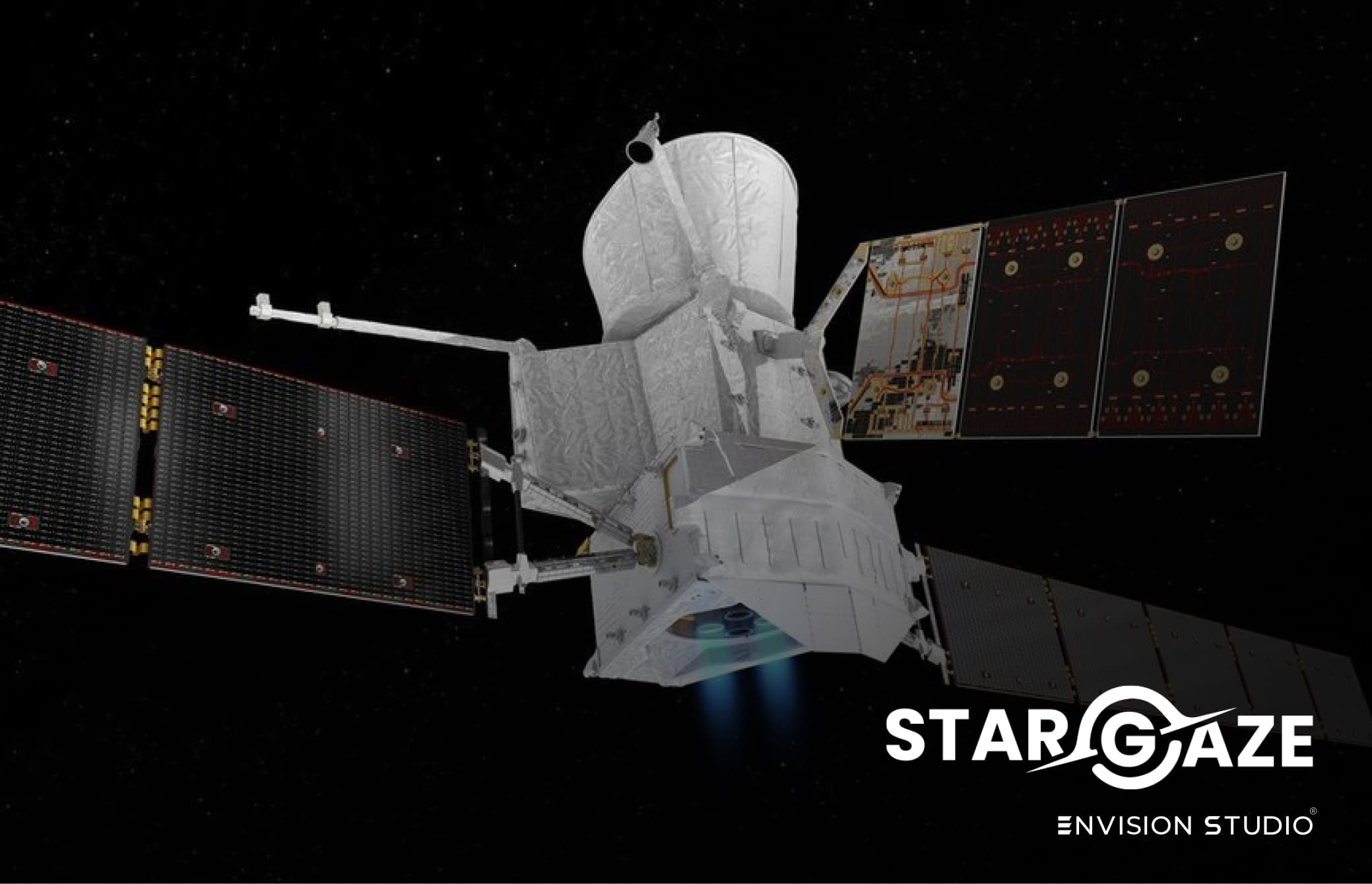
The BepiColombo Mercury mission has spent nearly 8 years flying toward the smallest, least-explored planet in our solar system — and it isn’t even the distance that made it hard. Getting to Mercury is actually harder than reaching Pluto. Here’s why, and what arrives there in November 2026.
Why Mercury Is Harder to Reach Than It Sounds
Mercury’s proximity to the Sun creates a strange problem: a spacecraft launched from Earth is already moving fast in the Sun’s direction, and it has to shed an enormous amount of that speed just to be pulled in and captured by Mercury’s weak gravity rather than simply flying past it. Solving that problem is why BepiColombo’s route to Mercury took nearly 8 years and required flybys of three different planets.
The Route — One Earth Flyby, Two of Venus, Six of Mercury
The BepiColombo Mercury mission launched on 20 October 2018 from Europe’s spaceport in French Guiana. Since then, it has flown past Earth once, Venus twice, and Mercury itself six times — each flyby precisely bleeding off speed and bending its trajectory, before finally being captured into Mercury orbit on 21 November 2026.
Even arrival isn’t a single moment. Mission teams describe roughly half a year of intense operations following orbital capture as BepiColombo’s two orbiters separate and settle into their final positions.
Two Spacecraft, One Mission
BepiColombo is actually two separate orbiters travelling together. The Mercury Planetary Orbiter, led by the European Space Agency, will map the planet’s surface and interior. The Mercury Magnetospheric Orbiter, led by Japan’s JAXA, will study Mercury’s magnetic field and the space environment surrounding it. Flying as a joint mission lets each agency focus on what it does best.
Named After the Man Who Made It Possible
The mission is named after Giuseppe “Bepi” Colombo, an Italian mathematician and engineer who discovered that Mercury rotates on its axis exactly three times for every two orbits it completes around the Sun — a strange orbital rhythm nobody expected. Colombo also suggested the gravity-assist technique that NASA later used to send its Mariner 10 spacecraft past Mercury three times in the 1970s, the first mission ever to visit the planet up close.
What Comes Next
Only three missions in history have studied Mercury up close — Mariner 10 in the 1970s, MESSENGER in the 2010s, and now BepiColombo. Once settled into orbit, BepiColombo will spend roughly a year mapping Mercury’s composition, magnetic field and geological history, at times enduring surface-facing temperatures above 350°C — data that will help explain not just Mercury’s story, but how rocky planets like Earth formed in the first place.
🥽 Download on Meta Quest |
🤖 Free on Android |
🍎 Download on iOS
Frequently Asked Questions
When does BepiColombo arrive at Mercury?
BepiColombo’s two orbiters will be captured into Mercury orbit on 21 November 2026, following flybys designed by ESA and JAXA.
Why does it take so long to reach Mercury?
A spacecraft heading toward the Sun must shed enormous speed to be captured by Mercury’s weak gravity rather than flying past it, requiring multiple flybys of Earth, Venus and Mercury to gradually slow down.
Who runs the BepiColombo mission?
BepiColombo is a joint mission between the European Space Agency (leading the Mercury Planetary Orbiter) and Japan’s JAXA (leading the Mercury Magnetospheric Orbiter).
How many missions have visited Mercury?
Only three missions in history have studied Mercury up close — Mariner 10 in the 1970s, MESSENGER in the 2010s, and BepiColombo arriving in November 2026.
Mission facts sourced from ESA and CNN Science — esa.int/BepiColombo_overview